Loading the atelier…
Six techniques we work in.
The craft.
The workshop in Patel Nagar opened nineteen years ago. The same twenty people cut, stitch, and finish every sharara, gharara, and indo-western piece on this site — the ombré dyes, the Zardozi, Aari, and Mukaish embroidery, all by hand. Phulkari from Punjab, Chikankari from Lucknow, Banarasi and Bandhani sarees, men's wear, and kids come from partners we've known just as long — so the customer can find everything under one roof. Phone, not email. Trust, not briefs.
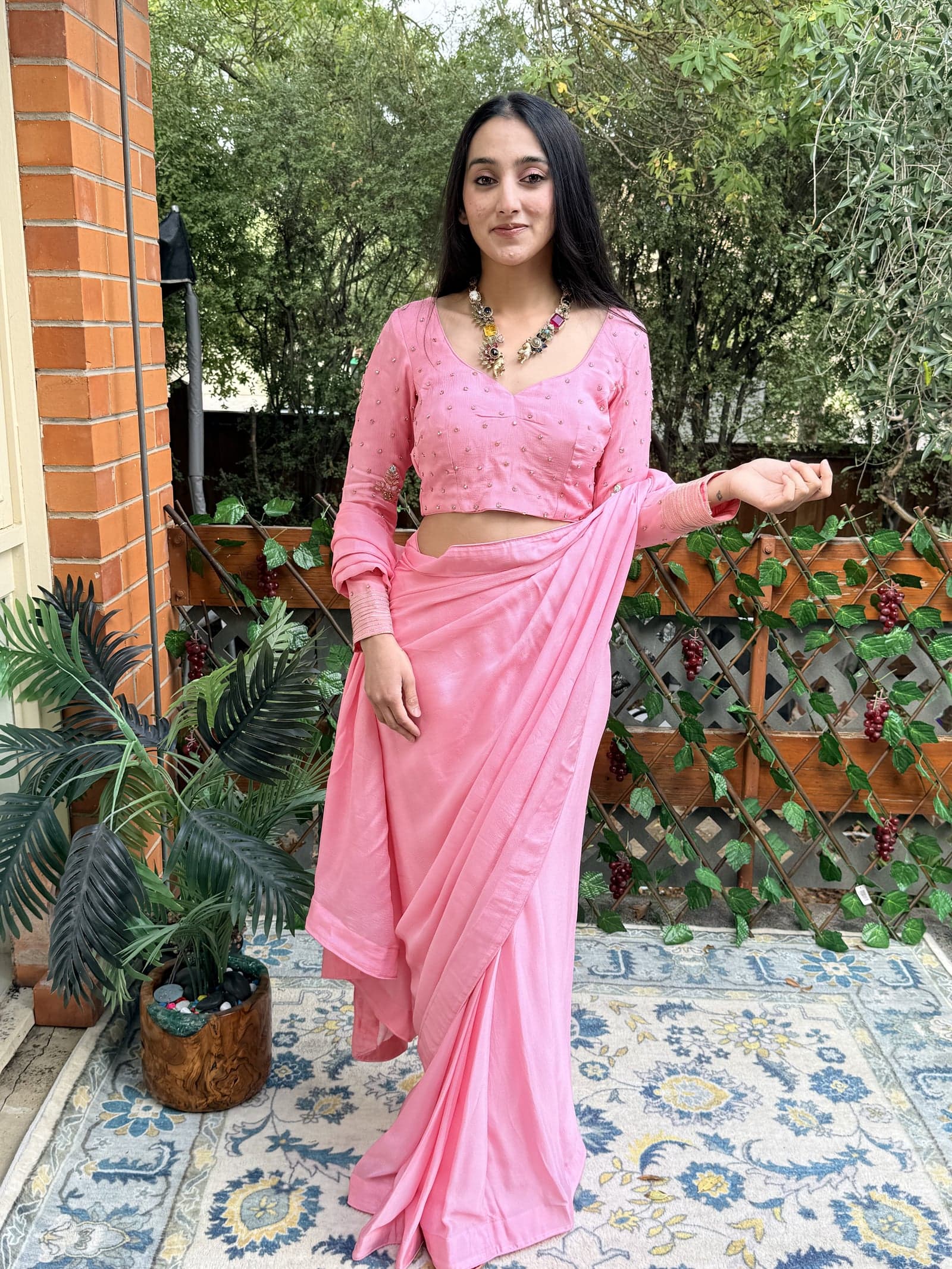
Technique · Banaras
Banarasi zari
ज़री
Woven on pit looms in the lanes of Varanasi by Naqshbandi master-weaver families, Banarasi zari pairs silk warp with real silver-gilt metallic thread. The atelier works the kadhua, jangla and tilfi vocabularies — discontinuous weft, vine motifs, two-shuttle figuring — and pays for the eight to twelve loom-weeks a single saree pallu can ask of one weaver's days. The cloth is older than the country.
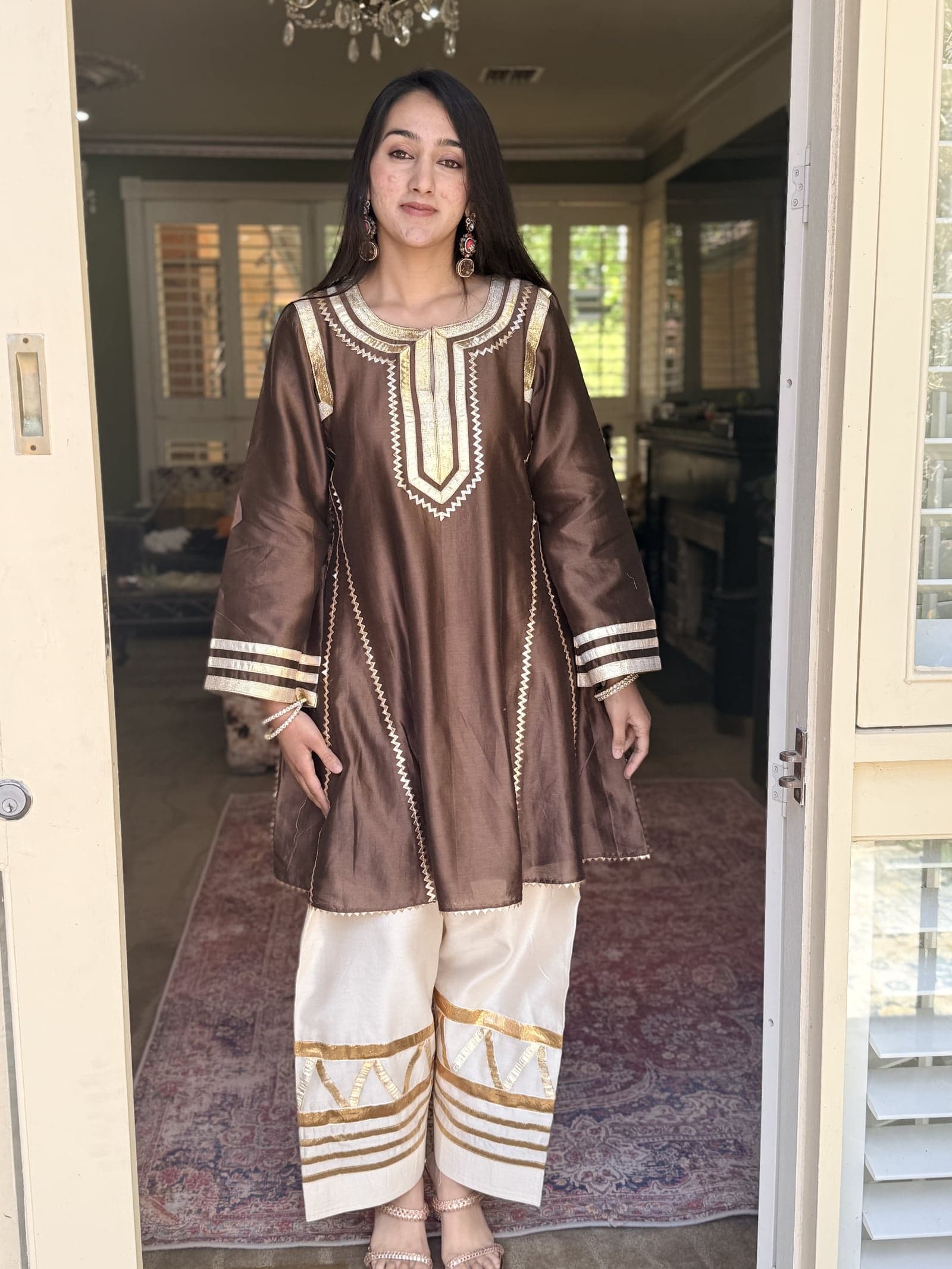
Technique · Lucknow
Chikankari
चिकनकारी
Hand embroidery worked on white muslin in the alleys behind Chowk, Lucknow — a Mughal inheritance that survives because women still teach it to their daughters at dusk. Chikankari is a quiet discipline of named stitches: bakhiya, phanda, ghaas patti, hool, jaali, keel kangan. The atelier commissions panels finished by daylight where possible and by oil-lamp where tradition still asks for it. Eight to fourteen weeks for a full kurta.
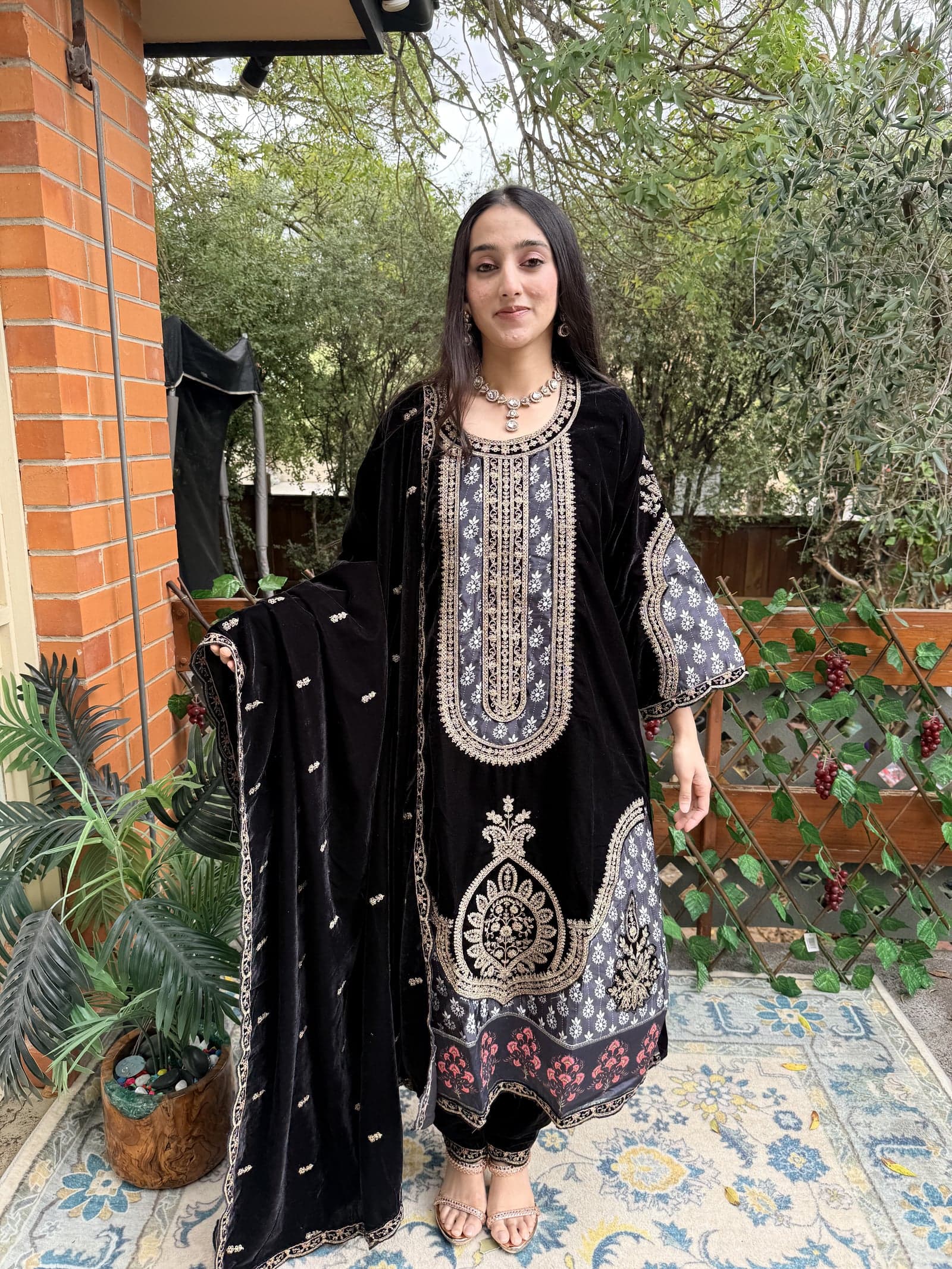
Technique · Hyderabad / Delhi lineage
Zardozi
ज़रदोज़ी
Real silver-gilt and gold metallic thread embroidery, worked on a wooden adda frame with hooked aari needle and beads — a court craft that travelled from Mughal Delhi into the Nizam's Hyderabad and stayed. Zardozi is heavy, slow, and unforgiving: a borderline error costs days of unpicking. The atelier ships zardozi only in pieces where the karigar's name can be carried with the cloth, and only in metal that won't tarnish before the second wearing.
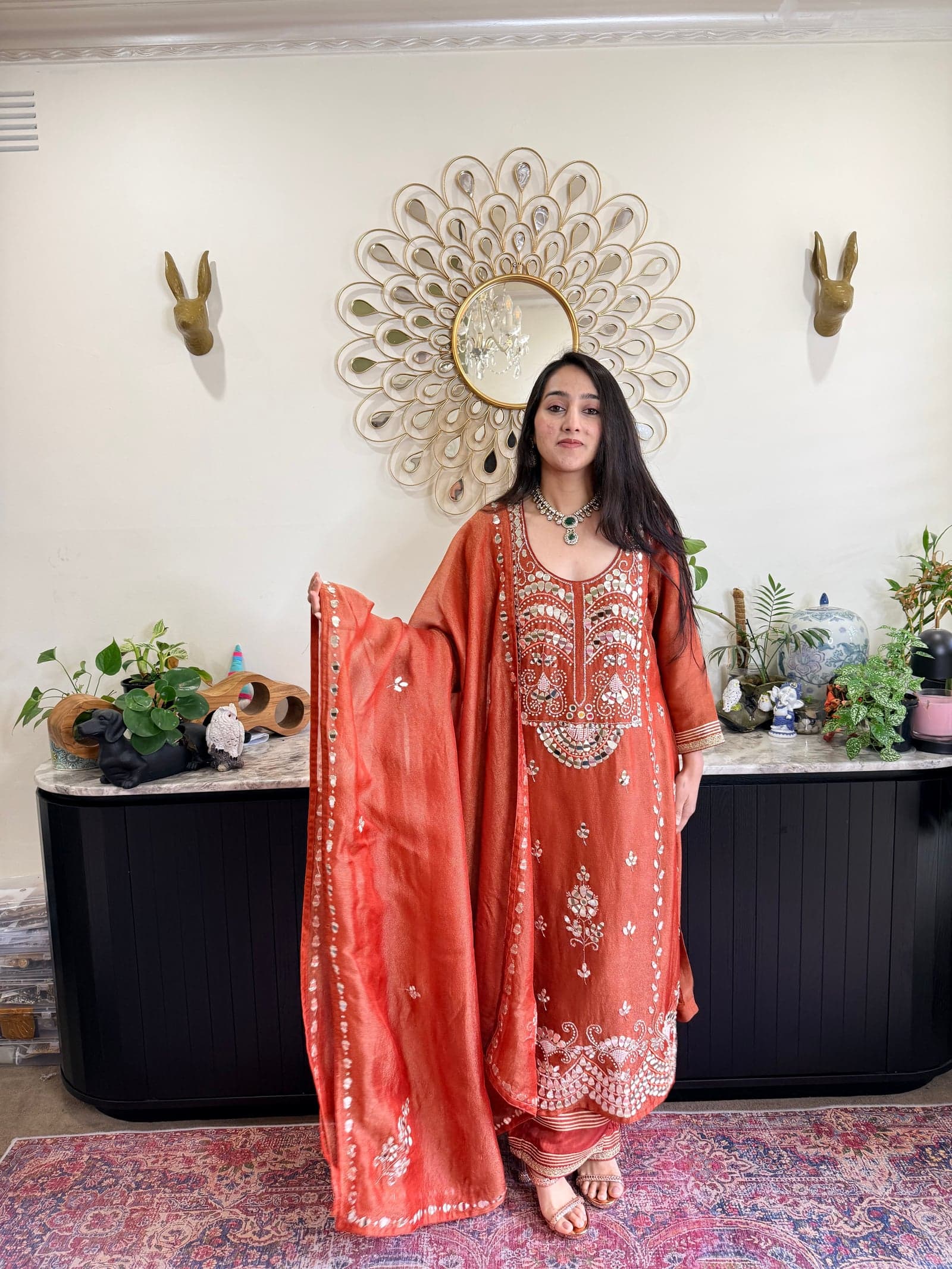
Technique · Jaipur, Rajasthan
Gota patti
गोटा पट्टी
Strips of woven gold-foil ribbon (gota) applied to base cloth in geometric and floral idioms — Rajput court festivity made into a textile language. Done well, gota patti reads as architecture: tessellated rosettes, mirror anchoring, the patti edge folded by thumb-feel and not by template. The atelier sources gota from one family in Jaipur's Johari Bazaar and finishes panels in Melbourne so the geometry survives the freight.
Technique · Kutch, Gujarat
Bandhani
बंधनी
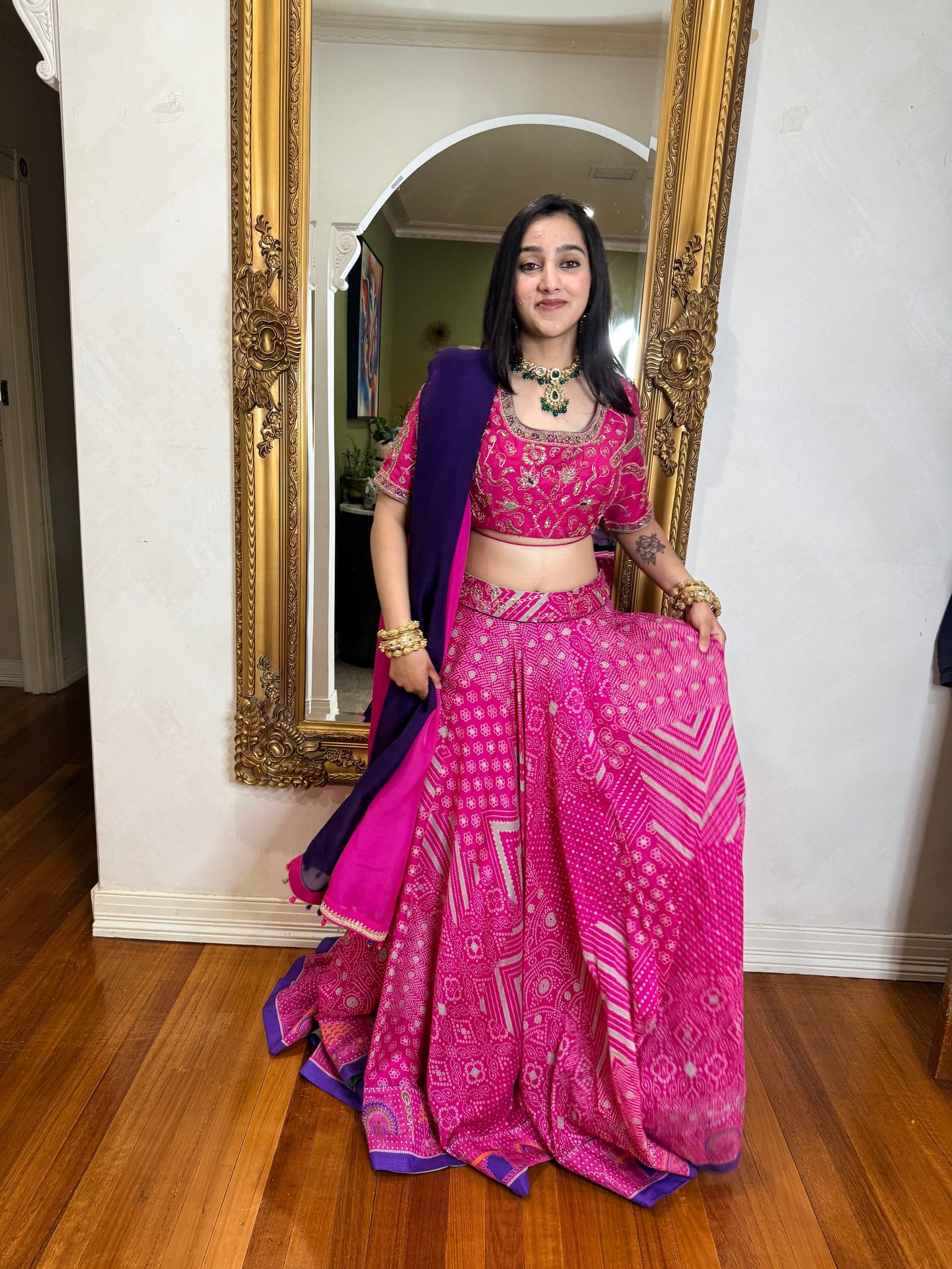
Tie-dye in the Kutchi register — women bind hundreds of tiny resist-dots into cloth with thumbnail and thread before it ever sees colour. The geometry is grid-strict and the count is everything: a fine bandhej dupatta can hold forty thousand bound points across a single panel. The atelier works with a women's collective near Bhuj that learned bandhani from their mothers and is teaching it now to their daughters, on schedule, in full daylight, paid by the panel not the piece.
Technique · Lucknow
Mukaish
मुक़ैश
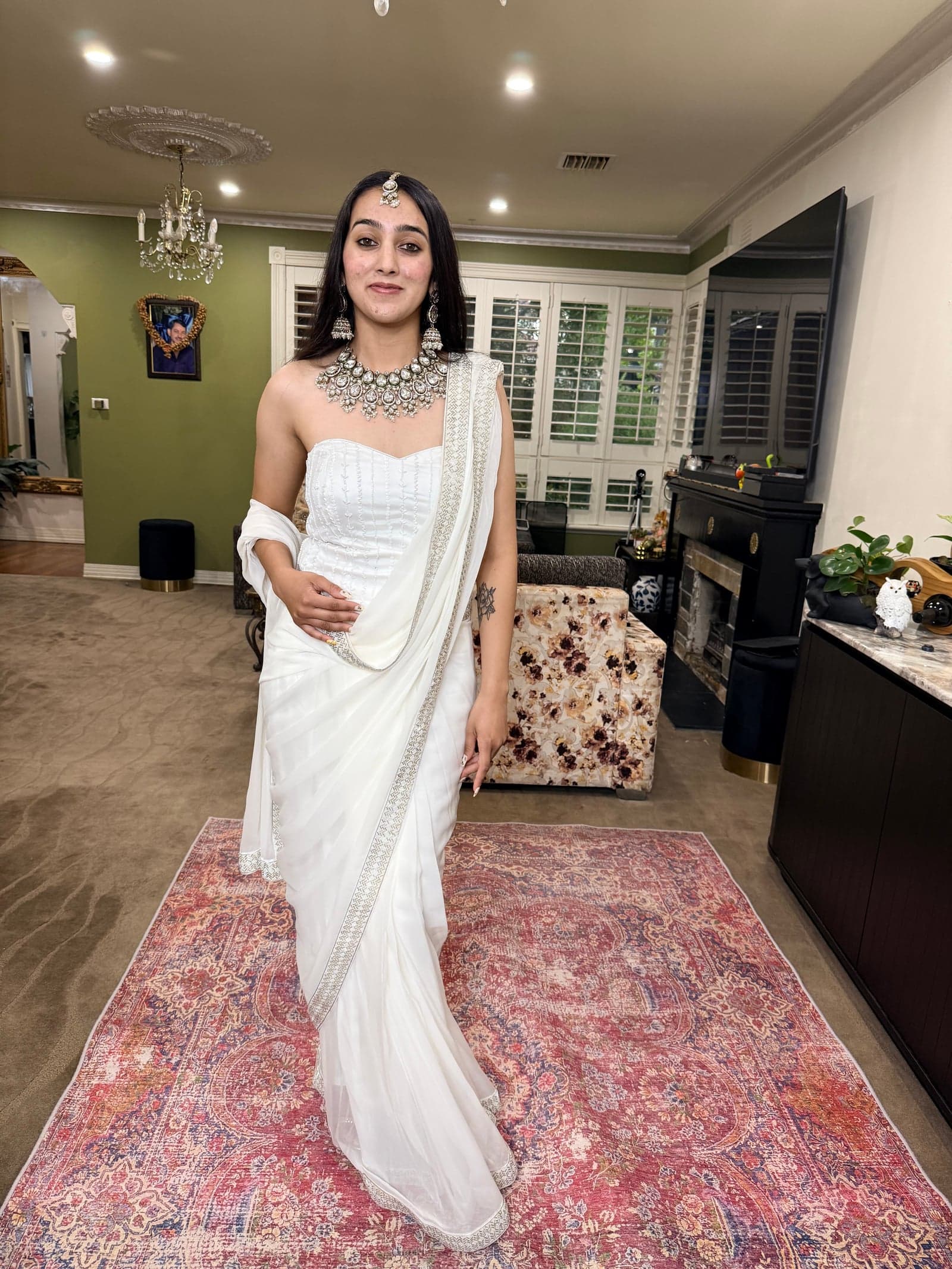
The metallic-wire complement to chikankari — fine silver or gold badla wire twisted through muslin by hand to leave a small bright dot, called fardi-ka-kaam. Mukaish almost died with the last generation of karigars in Lucknow; perhaps a hundred true practitioners remain. The atelier commissions sparingly and slowly, and pays the rate the work asks for, because a mukaish panel that never gets made is a stitch the country forgets.